Raw Mango
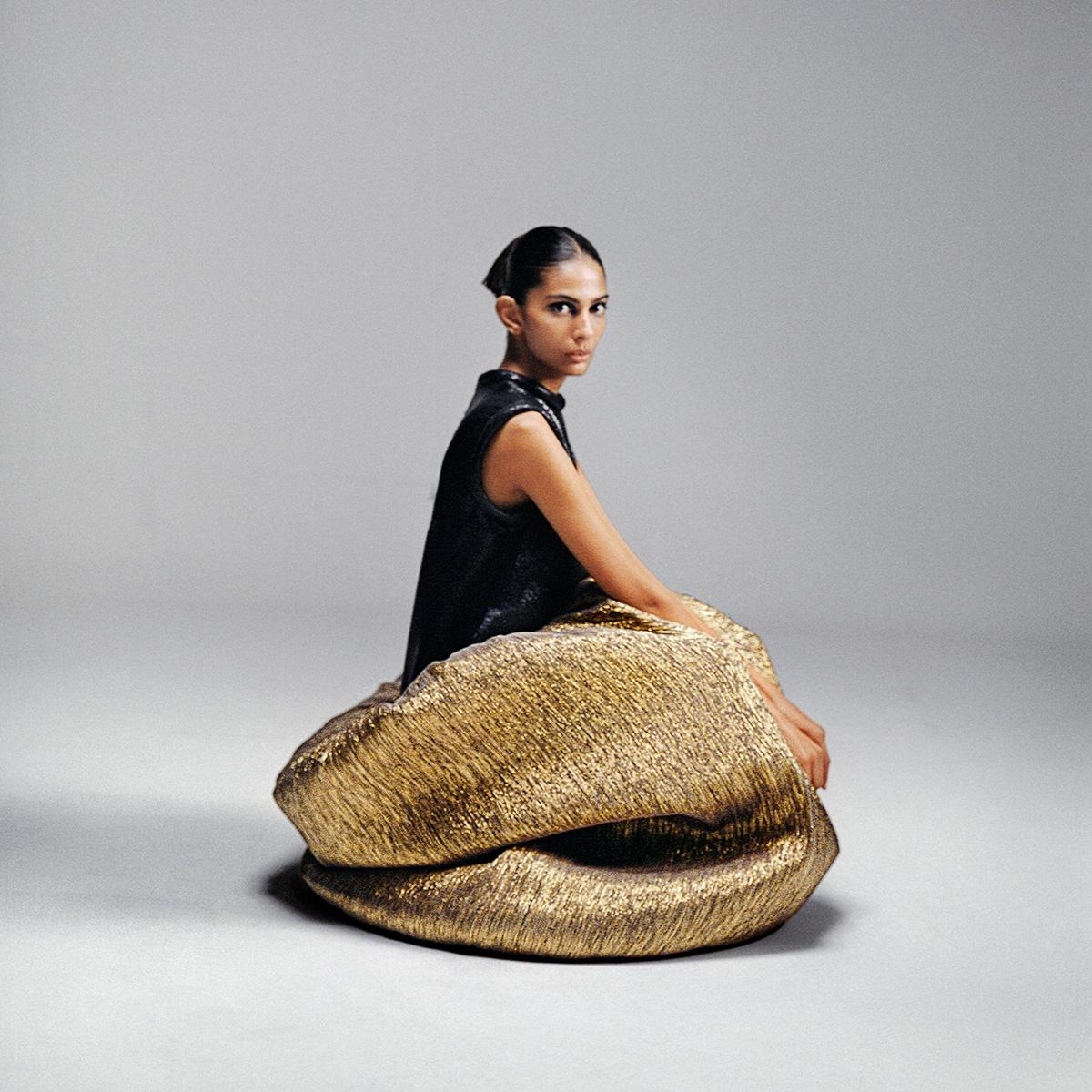
Questioning place and perspective, Raw Mango draws from the vibrant philosophies and cultures of India, and is acknowledged for creating a new design lexicon within contemporary India. With roots in craft and community, its relationship with handloom began in 2008 as an investigation of possibilities.
As a design house it continues to create new conversations within textile, tradition and identity through a range of saris, garments and objects. Created with weavers across Rajasthan, Madhya Pradesh, West Bengal, Andhra Pradesh and Varanasi, Raw Mango’s designs innovate upon centuries-old skills in pursuit of defining a new aesthetic vocabulary.
‘Textile Designer’ — Founder Sanjay Garg’s title of choice, also remains the genesis of the brand. Innovations on the loom, as 2D design interventions, birthed a new era for women draped in handwoven saris. Prior, there was no identifiable marker of contemporary design and craft within a brand offering.
Since then, the expansive offering of garments across occasion wear and separates continues to define a new Indian aesthetic. The continued influence of Raw Mango imagery is credited to casting aside aesthetic pursuits in favour of questioning cultural mores, whether social, cultural or political.
As a design house, Raw Mango remains fearless, pursuing the space and generative tension between convention, form and innovation. Its philosophy articulates itself across each touchpoint - extending beyond textile and garments. Its spatial design involves in-house prototyping and development of lighting, fixtures, flooring and custom finishes. Largely imagined as a pursuit of pleasure, and always of the zeitgeist, Raw Mango events range from baithaks (seated musical evenings), artist book launches to intimate dinners with a regional focus. Music’s power to shape-shift, congregate, invite stillness or disperse catalytic energy is not lost on Raw Mango. Music accompanies the brand across all touch points.
Raw Mango remains committed to documenting craft and regional realities, bypassing the prevailing romanticised notions of authorship. Whether through its archival textile collection or regional films each documents the craft of weaving, food or musicality as an outcome of a life lived.
As a design house it continues to create new conversations within textile, tradition and identity through a range of saris, garments and objects. Created with weavers across Rajasthan, Madhya Pradesh, West Bengal, Andhra Pradesh and Varanasi, Raw Mango’s designs innovate upon centuries-old skills in pursuit of defining a new aesthetic vocabulary.
‘Textile Designer’ — Founder Sanjay Garg’s title of choice, also remains the genesis of the brand. Innovations on the loom, as 2D design interventions, birthed a new era for women draped in handwoven saris. Prior, there was no identifiable marker of contemporary design and craft within a brand offering.
Since then, the expansive offering of garments across occasion wear and separates continues to define a new Indian aesthetic. The continued influence of Raw Mango imagery is credited to casting aside aesthetic pursuits in favour of questioning cultural mores, whether social, cultural or political.
As a design house, Raw Mango remains fearless, pursuing the space and generative tension between convention, form and innovation. Its philosophy articulates itself across each touchpoint - extending beyond textile and garments. Its spatial design involves in-house prototyping and development of lighting, fixtures, flooring and custom finishes. Largely imagined as a pursuit of pleasure, and always of the zeitgeist, Raw Mango events range from baithaks (seated musical evenings), artist book launches to intimate dinners with a regional focus. Music’s power to shape-shift, congregate, invite stillness or disperse catalytic energy is not lost on Raw Mango. Music accompanies the brand across all touch points.
Raw Mango remains committed to documenting craft and regional realities, bypassing the prevailing romanticised notions of authorship. Whether through its archival textile collection or regional films each documents the craft of weaving, food or musicality as an outcome of a life lived.
Show More
Contact Details
Sales Contact
Catch Up